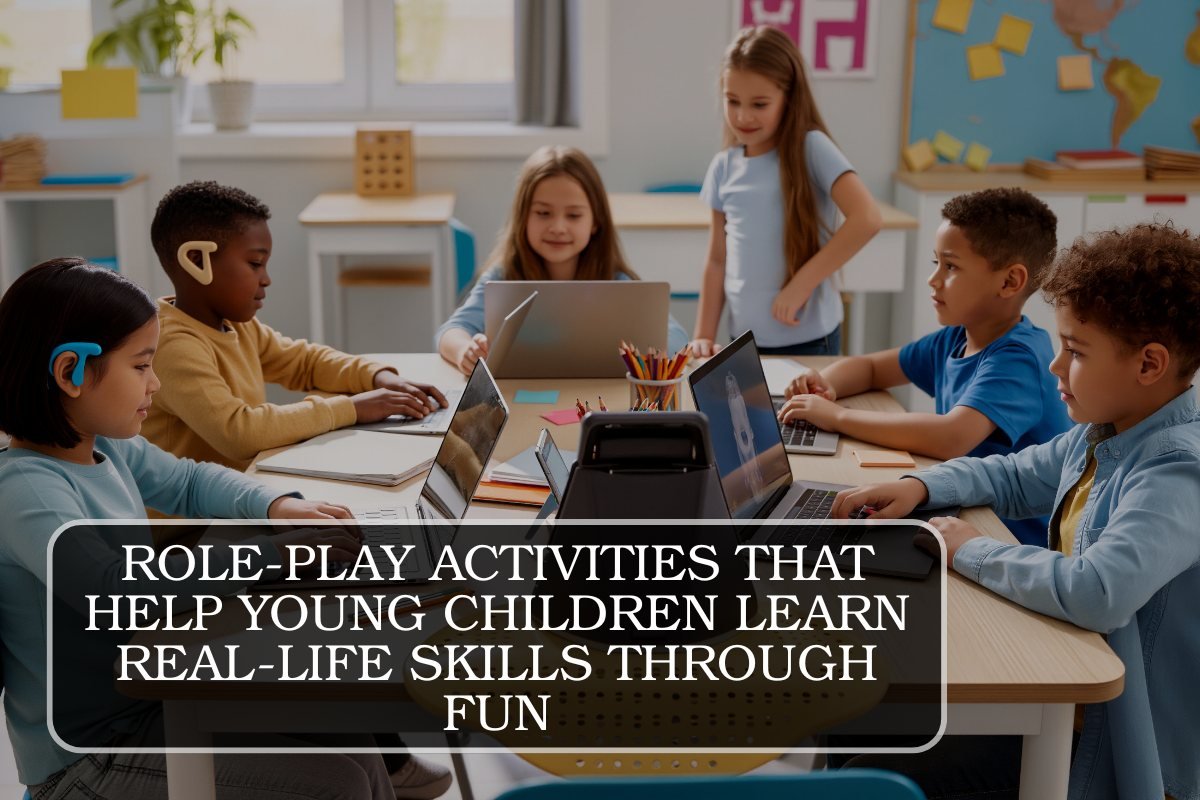
Role-play activities are a powerful tool in early childhood education that help young children learn real-life skills while having fun. By acting out various scenarios and assuming different roles, children gain valuable experiences that build communication, social, emotional, and cognitive abilities essential for their development.
Role-Play as a Learning Tool
Role-play provides children a safe space to explore and make sense of the world around them. Through imaginative and dramatic play, children simulate everyday activities, such as shopping, cooking, or caring for others, which helps them understand social roles and responsibilities.
This form of play nurtures creativity and problem-solving by inviting children to plan, negotiate, and make decisions during play. It fosters language development and communication skills as children practice vocabulary, listening, and turn-taking.
Moreover, role-play builds emotional intelligence by allowing children to express feelings, develop empathy, and better understand others’ perspectives.
Real-Life Skills Developed Through Role-Play
- Communication and Language: Children practice speaking, vocabulary, and conversational skills, enhancing confidence and verbal expression.
- Social Interaction: Taking turns, sharing, cooperating, and resolving conflicts during role-play prepare children for positive relationships.
- Emotional Regulation: Acting out scenarios allows children to express emotions safely, understand cause and effect, and develop self-awareness and empathy.
- Cognitive Skills: Problem-solving, planning, and decision-making are exercised as children create and adapt roles or find solutions.
- Cultural Awareness: Role-play introduces children to different social roles, cultures, and traditions, fostering respect and tolerance.
Fun Role-Play Ideas for Young Children
- Home Helper: Pretending to cook, clean, or care for a baby doll teaches daily life skills and responsibility.
- Shopkeeper and Customer: This encourages math skills like counting money and communication skills through buying and selling scenarios.
- Doctor and Patient: Children explore healthcare, empathy, and problem-solving by diagnosing and caring for “patients.”
- Community Helpers: Playing roles such as firefighters, police officers, or teachers builds understanding of community roles.
- Restaurant or Café: Children take orders, prepare (pretend) food, and serve, improving language and social skills in a group setup.
Tips for Enhancing Role-Play Experiences
Provide diverse props and realistic materials to spark imagination and make scenarios more engaging. Encourage child-led play where kids decide the roles and storylines, fostering autonomy and creativity.
Participate occasionally to model behaviors and language, but allow children freedom to explore and collaborate. Rotate themes and introduce new cultural or social concepts to broaden understanding and inclusivity.
FAQ
1. Why is role-play important for young children?
It supports holistic development in communication, social, emotional, and cognitive domains through experiential learning.
2. How does role-play improve social skills?
Children learn cooperation, sharing, empathy, and conflict resolution by interacting in group scenarios.
3. What materials are needed for role-play?
Simple props like costumes, household items, toys, and themed kits (doctor’s set, kitchen play) enhance realism.
4. How can parents or teachers facilitate role-play?
By providing a safe space, offering ideas and props, participating without dominating, and encouraging storytelling.
5. Does role-play prepare children for school and life?
Yes, it builds foundational skills such as communication, problem-solving, emotional regulation, and cultural awareness essential for school and everyday life.
Role-play activities transform learning into an enjoyable, meaningful experience where young children develop critical life skills through imagination and interaction, setting a foundation for lifelong growth and social competence.