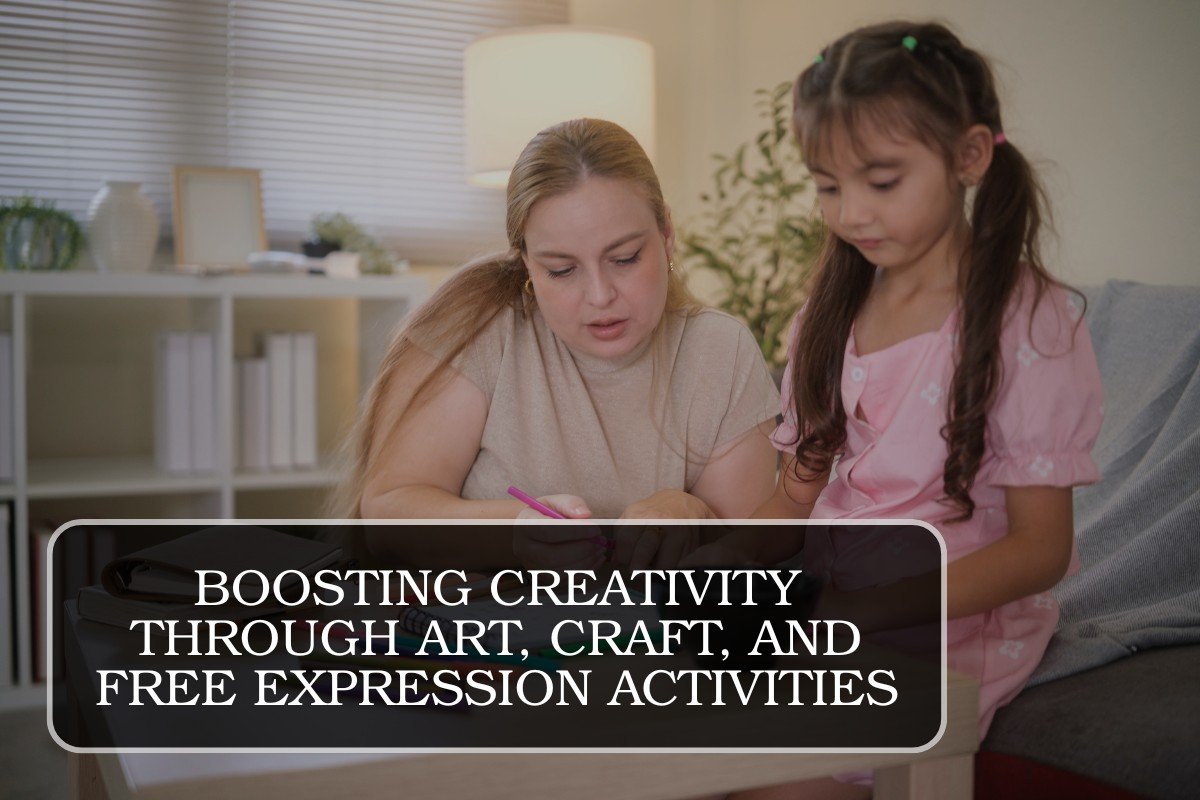
Creativity is one of the most valuable traits in child development, shaping how children think, solve problems, and express themselves. Art, craft, and free expression activities are essential tools that nurture imagination, build confidence, and allow children to communicate emotions in unique ways. Encouraging creative exploration not only enhances artistic skills but also supports emotional and cognitive growth.
The Role of Art in Encouraging Imagination
Art offers children a powerful outlet for self-discovery. When children paint, draw, or sculpt, they interpret the world through their own lens. This process develops their capacity for observation and interpretation.
Colors, shapes, and textures give them a vocabulary to express feelings they might not yet have words for. Beyond artistic ability, art-making encourages focus, patience, and attention to detail—skills that extend into academic and social areas.
Crafting to Build Coordination and Problem-Solving Skills
Craft activities such as cutting, folding, and assembling improve fine motor coordination while promoting strategic thinking. Craft projects often have flexible outcomes, encouraging children to explore multiple solutions.
For example, assembling a collage or designing a paper sculpture can teach children to cope with mistakes and adapt their ideas. Building such resilience strengthens their confidence and independence.
Craft-based learning also introduces mathematical and spatial awareness. Measuring, estimating, and following patterns during crafting subtly reinforce logical and analytical thinking. These hands-on experiences create a foundation for success in subjects like geometry, engineering, and design.
Free Expression and Emotional Development
Free expression refers to unstructured creative play where children make choices about what and how they create. Unlike guided art tasks, this kind of activity gives children full control, making it a safe space for emotional release. Through spontaneous expression—such as painting freely or storytelling with puppets—children learn to manage emotions, build empathy, and develop self-awareness.
This freedom also fuels intrinsic motivation. When creativity is not confined by rules or expectations, children develop genuine curiosity and persistence. These traits are essential for innovation and leadership in later life.
Integrating Art and Free Expression into Daily Routines
Encouraging creativity doesn’t require elaborate materials or special settings. Simple household items like cardboard boxes, fabric scraps, or natural materials can spark imaginative projects. Parents and educators can:
- Set aside daily or weekly “art time” with minimal direction.
- Display children’s artwork to validate their efforts.
- Provide open-ended prompts like “create something that sounds like music” or “build a dream city.”
- Encourage storytelling alongside artwork to merge language and creativity.
These small routines nurture continuous creative thinking and help children embrace learning as an enjoyable, self-driven process.
Long-Term Benefits of Creative Engagement
Creative engagement through art and craft builds essential life skills—collaboration, creative problem-solving, and adaptability. It also reduces stress and enhances concentration, contributing to overall mental well-being. Children who practice free expression tend to approach challenges with flexibility and optimism, qualities that shape lifelong learning and success.
FAQ
1. Why is creativity important in early childhood?
Creativity supports cognitive development, emotional growth, and problem-solving skills. It encourages children to think beyond limits and express their individuality.
2. How can parents nurture creativity at home?
Parents can provide open-ended materials, celebrate imaginative output, and create time for unstructured play and art-making without focusing on perfection.
3. Can creative activities improve academic performance?
Yes, creative thinking enhances memory, attention, and analytical skills, which benefit subjects like math, reading, and science.
4. What are some examples of free expression activities?
Painting freely, improvisational storytelling, clay modeling, music-making, and creative movement or dance allow children to express themselves spontaneously.
5. How often should creative activities be included?
Incorporating creative play or art sessions at least a few times a week helps maintain consistent engagement and supports ongoing skill development.