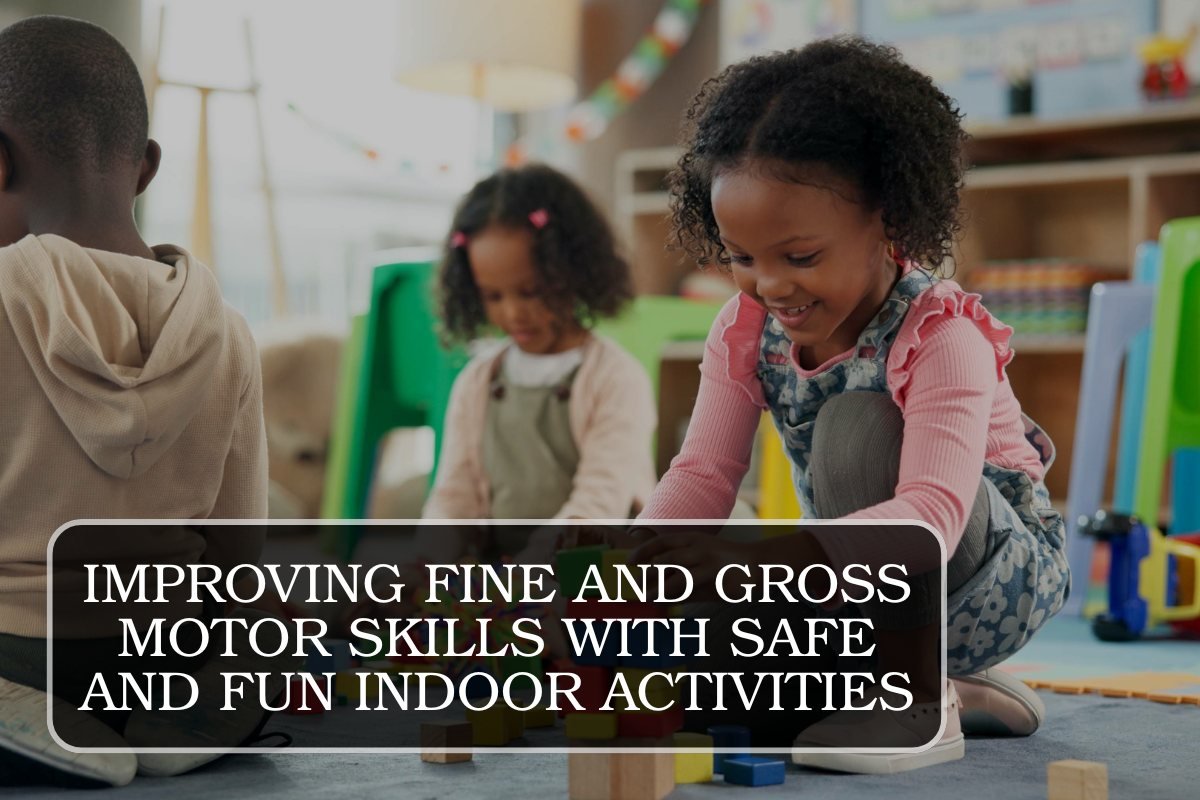
Improving fine and gross motor skills in young children through safe and fun indoor activities is essential for their physical development and overall growth. The Playway method, which emphasizes learning through play, provides excellent opportunities for children to develop these important skills in engaging, hands-on ways.
Understanding Fine and Gross Motor Skills
Fine motor skills involve the coordination of small muscles, particularly in the hands and fingers, enabling tasks like writing, buttoning, and using utensils. Gross motor skills involve larger muscle groups and include activities such as crawling, walking, jumping, and balancing. Both sets of skills are crucial for a child’s autonomy and academic readiness.
Fun Indoor Activities to Enhance Fine Motor Skills
- Playdough Creations: Molding and shaping playdough strengthen finger muscles and promote creativity. Children can roll, pinch, and sculpt different shapes and objects, improving dexterity.
- Threading Beads: Using colorful beads and strings encourages hand-eye coordination and precision grip development.
- Sticker Collages: Peeling and placing stickers on paper enhances finger control and creativity.
- Drawing and Coloring: These activities help children control hand movements and understand shapes and colors.
- Puzzle Play: Age-appropriate puzzles improve finger manipulation, spatial awareness, and problem-solving.
Engaging Gross Motor Skill Activities Indoors
- Obstacle Courses: Create safe obstacle courses using cushions, tunnels, or household items to promote crawling, balancing, and coordination.
- Dance and Movement Songs: Songs with motions, like “Head, Shoulders, Knees and Toes,” help children synchronize movements and develop rhythm.
- Balloon Games: Hitting or catching balloons enhances hand-eye coordination and reflexes in a gentle, controlled manner.
- Animal Movement Games: Encouraging children to mimic animals—jump like a frog, slither like a snake—builds muscle strength and coordination.
- Balancing Games: Walking on taped lines or low beams indoors improves balance and concentration.
Safety Considerations
Always ensure that activity spaces are free of sharp edges, obstacles, and hazards. Use age-appropriate materials and supervise children closely to promote safe play environments. Encourage gradual skill development and celebrate small milestones to boost confidence and motivation.
FAQ
Q: What is the difference between fine and gross motor skills?
A: Fine motor skills involve small muscle movements, mostly in hands and fingers, while gross motor skills involve large muscles used for whole-body movements.
Q: Why are play-based activities effective for motor skills development?
A: Play makes practice enjoyable, naturally motivates children to participate, and helps integrate skill development with creativity and social interaction.
Q: Can these motor activities be done indoors safely?
A: Yes, with appropriate supervision and safe setups, many fine and gross motor activities can be effectively conducted indoors.
Q: How do motor skills impact learning and daily life?
A: Motor skills are fundamental for tasks like writing, dressing, playing, and sports, impacting academic readiness and daily independence.
Q: How often should children engage in motor skill activities?
A: Regular engagement, ideally daily, supports consistent development, with activities tailored to the child’s interests and abilities.
Combining safe, fun, and developmentally appropriate indoor activities with the Playway method provides a rich environment for nurturing fine and gross motor skills essential for children’s growth and confidence. This holistic approach prepares children for both academic challenges and everyday tasks with agility and enthusiasm.