Urban transportation in India has undergone a remarkable transformation over the past two decades. Metro rail systems have emerged as the backbone of mobility in cities across the country—from Delhi and Mumbai to Bengaluru, Kolkata, Chennai, Hyderabad, and beyond. As more cities embrace metro rail as a solution to urban congestion, the demand for skilled professionals to operate and maintain these systems continues to grow.
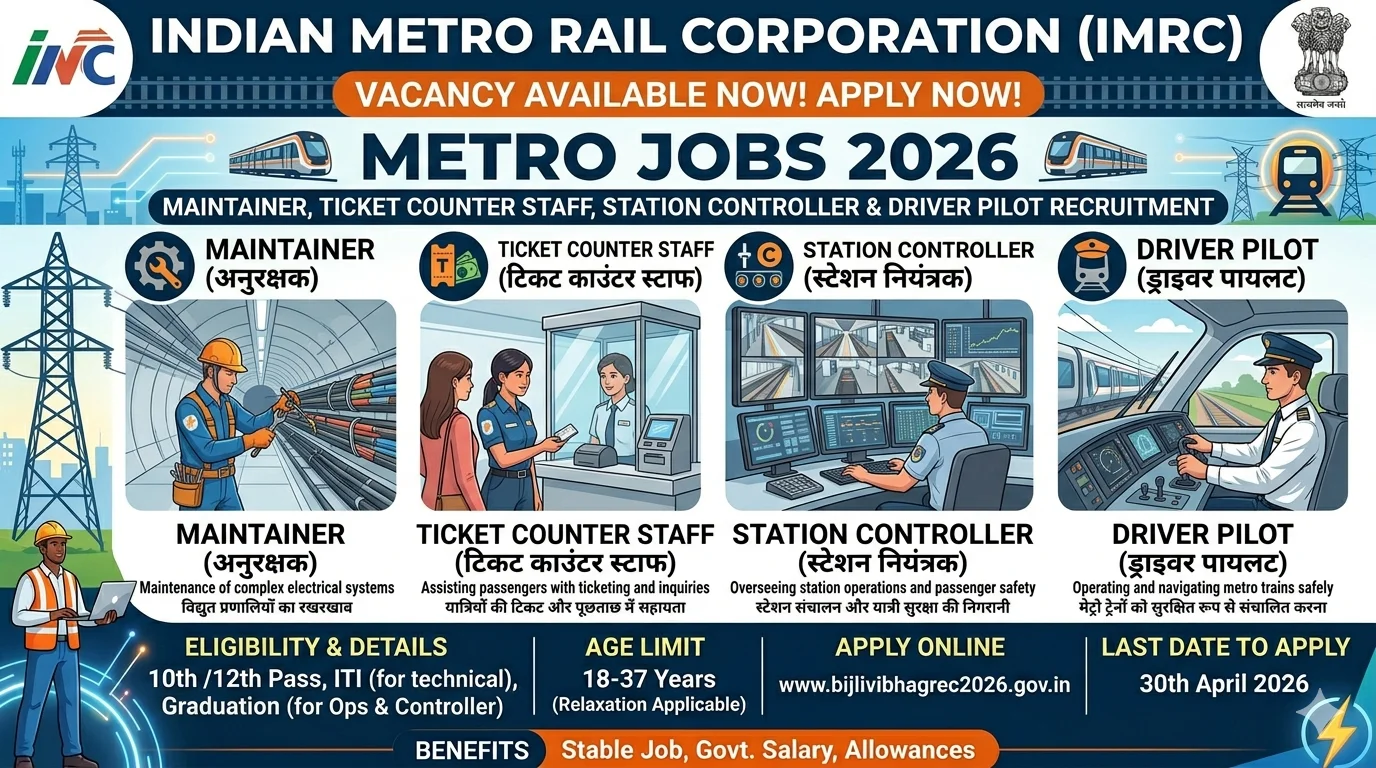
Metro jobs in 2026 represent more than just employment opportunities. They offer careers in a dynamic, modern sector that combines technology, public service, and operational excellence. Whether you aspire to work behind the scenes as a Maintainer, serve commuters as Ticket Counter Staff, ensure safety as a Station Controller, or operate trains as a Driver Pilot, the metro sector provides stable government or public sector employment with clear career progression. Here is your comprehensive guide to understanding and securing these coveted positions.
Understanding the Metro Rail Ecosystem
Metro rail systems are complex organizations that require a diverse workforce to operate safely and efficiently. Unlike traditional railway employment, metro jobs often fall under city-specific metro corporations—typically joint ventures between central and state governments. These corporations operate with a blend of public sector stability and modern management practices.
The recruitment landscape for metro jobs in 2026 is characterized by structured selection processes, competitive examinations, and a focus on technical competence and safety consciousness. Positions are generally categorized into executive and non-executive cadres, with maintainer, ticket counter staff, station controller, and driver pilot roles falling under the non-executive or technician categories.
Understanding the Role Categories
Each metro role carries distinct responsibilities, qualifications, and working conditions. Understanding these differences will help you identify where your skills, qualifications, and career aspirations align.
Maintainer Positions
Maintainers are the technical backbone of metro operations. Working across various disciplines—electrical, mechanical, electronics, civil, and track maintenance—these professionals ensure that every component of the metro system functions reliably and safely. Responsibilities vary by specialization but generally include inspecting and testing equipment, performing preventive and corrective maintenance, troubleshooting faults, repairing or replacing defective components, and maintaining maintenance records.
In the electrical domain, maintainers work on traction systems, power supply equipment, and lighting systems. Mechanical maintainers focus on rolling stock—the train cars themselves—including doors, brakes, HVAC systems, and coupling mechanisms. Electronics and communication maintainers work on signaling systems, train control systems, and communication networks. Track maintainers inspect and maintain the rail infrastructure.
The educational qualification for maintainer positions typically requires a diploma or ITI (Industrial Training Institute) certificate in the relevant trade—electrical, mechanical, electronics, or civil engineering. Candidates with National Trade Certificate (NTC) or National Apprenticeship Certificate (NAC) are also eligible. Age limits generally range from 18 to 28 years, with relaxations applicable for reserved categories.
Ticket Counter Staff Positions
Ticket counter staff—often referred to as customer service assistants or ticketing agents—serve as the face of the metro system for millions of commuters. Positioned at station ticket counters and customer service centers, they handle a range of responsibilities including issuing and renewing smart cards and tokens, processing fare payments, assisting commuters with inquiries about routes, fares, and station facilities, managing queues and ensuring efficient service, and handling complaints and escalations with patience and professionalism.
In 2026, metro systems have increasingly adopted digital ticketing, mobile applications, and automated fare collection. However, ticket counter staff remain essential—particularly for elderly commuters, tourists, and those who prefer or require in-person assistance. The role requires patience, clear communication, and the ability to work calmly during peak hours when stations are crowded and commuters may be pressed for time.
The educational qualification for ticket counter staff positions typically requires a bachelor’s degree from a recognized university. Proficiency in English and the local language is essential. Basic computer literacy and familiarity with point-of-sale systems are valuable. Age limits generally range from 18 to 28 years, with relaxations for reserved categories.
Station Controller Positions
Station controllers—sometimes referred to as station masters or station supervisors—hold significant responsibility for the safety and efficiency of station operations. Positioned at metro stations, they coordinate the interface between trains, commuters, and the central control room. Responsibilities include monitoring train movements and ensuring adherence to schedules, managing platform operations including boarding and alighting, coordinating with security and housekeeping staff, handling emergencies such as medical incidents or security threats, communicating with the operations control center, and ensuring compliance with safety protocols.
Station controllers must remain calm under pressure, make quick decisions during disruptions, and communicate clearly with commuters, staff, and control room personnel. The role requires a combination of operational knowledge, leadership skills, and customer service orientation.
The educational qualification for station controller positions typically requires a bachelor’s degree from a recognized university. Some metro corporations may prefer candidates with engineering diplomas or backgrounds in electronics, electrical, or mechanical disciplines. Good communication skills in English and the local language are essential. Age limits generally range from 18 to 28 years, with relaxations for reserved categories.
Driver Pilot Positions
Driver pilots—also referred to as train operators or motormen—operate the trains that move millions of commuters daily. This role carries immense responsibility, as safety of passengers and staff depends on the operator’s vigilance, judgment, and adherence to procedures. Responsibilities include operating trains according to schedules and signals, monitoring train systems and responding to alerts, maintaining awareness of track conditions and platform operations, communicating with station controllers and the operations control center, following emergency procedures when required, and completing pre-service and post-service train inspections.
Modern metro systems increasingly incorporate automatic train operation features, but driver pilots remain essential for monitoring systems, responding to unexpected situations, and ensuring passenger safety. The role requires sustained concentration, quick reflexes, and a strong commitment to safety.
The educational qualification for driver pilot positions typically requires a bachelor’s degree or a diploma in engineering in electrical, electronics, or mechanical disciplines. Candidates must meet stringent medical fitness standards, including vision and hearing requirements. A valid driving license may be required. Age limits generally range from 18 to 28 years, with relaxations for reserved categories.
The Recruitment Landscape in 2026
Metro recruitment follows structured processes conducted by individual metro corporations. While specific procedures vary by city and corporation, common elements characterize the selection journey.
Recruitment Authorities
Each metro system—Delhi Metro Rail Corporation (DMRC), Bengaluru Metro (BMRCL), Mumbai Metro, Kolkata Metro, and others—conducts its own recruitment. Candidates must monitor the official websites of the specific metro corporations where they wish to apply. Recruitment notifications are also published in leading newspapers and employment news.
Selection Process for Maintainer Positions
Maintainer recruitment typically involves a written examination testing technical knowledge in the relevant trade, general awareness, reasoning, and numerical ability. Candidates who qualify proceed to a skill test or trade test where practical competencies are assessed. Document verification follows for successful candidates.
Selection Process for Ticket Counter Staff
The selection process for ticket counter staff generally includes a written examination covering general knowledge, reasoning, numerical ability, and language proficiency. A computer-based test or typing test may be included. Candidates who qualify proceed to an interview where communication skills and customer service orientation are assessed.
Selection Process for Station Controller
Station controller recruitment typically involves a written examination covering general awareness, reasoning, numerical ability, and domain-specific knowledge related to metro operations. Candidates who qualify proceed to an interview where operational knowledge, communication skills, and decision-making abilities are evaluated. Psychological assessment may be part of the process given the role’s safety-critical nature.
Selection Process for Driver Pilot
Driver pilot recruitment is among the most rigorous, given the safety-critical nature of the role. Candidates typically undergo a written examination, followed by a psychometric test assessing concentration, reaction time, and situational judgment. A medical examination with stringent vision, hearing, and overall fitness standards follows. Candidates who clear these stages undergo extensive training before being certified to operate trains independently.
Skills and Qualities for Success
Beyond formal qualifications, certain qualities distinguish successful candidates and valued employees in metro roles.
Safety Consciousness
Metro operations prioritize safety above all else. Candidates who demonstrate a genuine commitment to following procedures, maintaining vigilance, and prioritizing safety in all situations will stand out throughout the recruitment and employment journey.
Technical Aptitude
For maintainer and driver pilot roles, a strong foundation in technical concepts and hands-on aptitude are essential. Practical experience gained through ITI training, apprenticeships, or prior work in relevant fields strengthens applications.
Communication Skills
Ticket counter staff, station controllers, and driver pilots must communicate clearly with commuters, colleagues, and control room personnel. Proficiency in English and the local language is essential. Clear articulation and the ability to convey information calmly under pressure are highly valued.
Composure Under Pressure
Metro operations involve unpredictable situations—medical emergencies, technical faults, security incidents, and crowd surges. Employees who remain calm, think clearly, and follow procedures during pressure situations contribute significantly to safe operations.
Physical and Medical Fitness
Driver pilots and maintainers in field roles must meet stringent medical fitness standards. Candidates should ensure they meet vision, hearing, and overall health requirements before investing significant effort in the recruitment process.
Preparing for Metro Recruitment
Success in metro recruitment requires focused preparation and attention to detail.
Monitor Notifications Diligently
Metro corporations announce vacancies periodically. Candidates should regularly visit official websites, subscribe to notification alerts, and monitor employment news. Application windows are often limited, so prompt action is essential.
Prepare Systematically for Examinations
For technical roles, focus on your trade-specific knowledge alongside general awareness, reasoning, and numerical ability. Previous years’ question papers and specialized coaching resources can be valuable. For non-technical roles, strengthen communication skills, computer literacy, and general knowledge.
Prioritize Physical and Medical Fitness
For roles with medical standards, undergo a preliminary health check to ensure you meet requirements before investing in the recruitment process. Maintaining overall fitness supports long-term career sustainability.
Building a Career in Metro
A position in the metro sector offers more than a job—it offers a career with stability, opportunities for advancement, and the satisfaction of serving millions of commuters daily. Many employees begin as maintainers or ticket counter staff and, through departmental examinations and experience, progress to supervisory roles, management positions, and specialized technical roles.
Metro corporations offer competitive pay scales, allowances, medical benefits, and retirement benefits that provide long-term financial security. The modern, technology-driven environment offers continuous learning opportunities and exposure to cutting-edge transportation systems.
Your Path Forward
Metro jobs in 2026 offer stable, dynamic career opportunities for candidates across technical and non-technical backgrounds. Whether you aspire to maintain essential systems as a Maintainer, serve commuters as Ticket Counter Staff, ensure station safety as a Station Controller, or operate trains as a Driver Pilot, metro corporations across India are seeking dedicated professionals to join their teams.
Approach your preparation with focus and dedication. Monitor notifications carefully, prepare systematically for examinations, and demonstrate the safety consciousness and commitment to service that metro corporations value. Your opportunity to build a career in one of India’s most dynamic sectors—and to serve the millions who rely on metro transit daily—is waiting.