The hospitality industry has always promised one thing above all else: opportunity.
But as we move through 2026, the landscape of hotel jobs has shifted dramatically. Gone are the days when a degree in hospitality management guaranteed a steady climb up the corporate ladder. Today, the industry is looking for something different—graduates who combine traditional service excellence with operational intelligence, digital fluency, and the resilience to manage in an era of constant change.
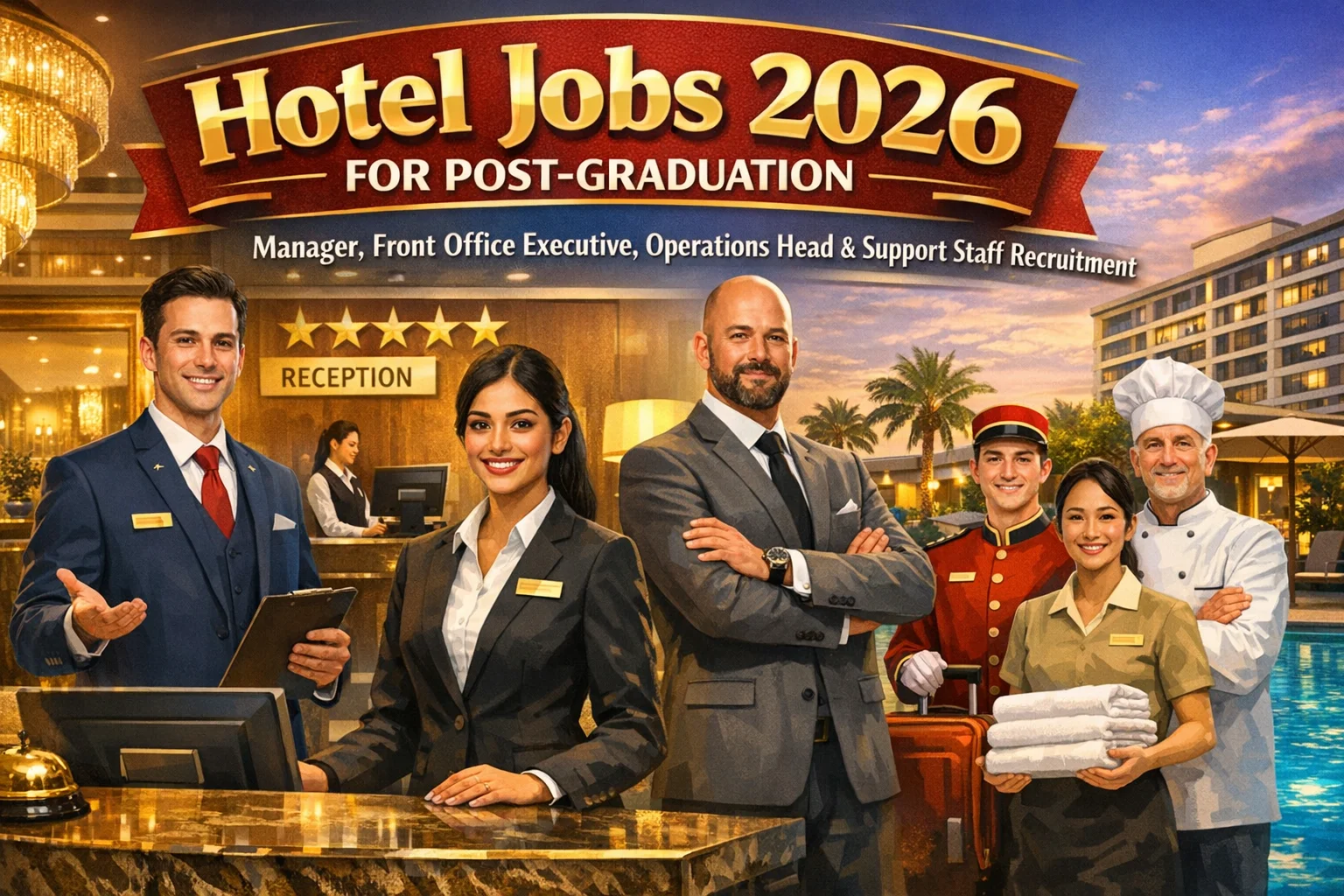
If you are completing your post-graduation and setting your sights on roles like Manager, Front Office Executive, Operations Head, or Support Staff leadership, you are entering a field that rewards adaptability above all else. The hotels that are thriving in 2026 are not just selling rooms; they are selling experiences, efficiency, and seamless technology integration. Here is your blueprint for turning your degree into a career in this evolving sector.
Understand the New Hierarchy of Hotel Roles
The traditional career path in hotels was linear: start at the front desk, work your way to supervisor, then assistant manager, and eventually general manager. While that path still exists, 2026 has introduced new layers of specialization and accelerated pathways for those with postgraduate degrees.
For post-graduates, the most sought-after roles fall into three categories:
1. Management Roles (Front Office Manager, Operations Manager, Assistant General Manager)
These positions require you to oversee teams, manage budgets, and ensure guest satisfaction metrics are met. Employers are no longer just looking for experience; they want candidates who can interpret data from property management systems, optimize staffing costs in real time, and maintain brand standards under pressure.
2. Front Office Executive
This role has evolved from a simple check-in position to a guest experience specialist. In 2026, Front Office Executives are expected to handle mobile check-ins, manage online reputation by resolving issues before they become reviews, and act as the first point of crisis management. It is a high-visibility role that serves as a fast track to management for graduates who excel.
3. Operations Head and Support Staff Leadership
Operations Heads are the backbone of a hotel. Whether in housekeeping, food and beverage, or engineering, these roles demand logistical expertise. Support staff recruitment—spanning roles like reservation specialists, concierge supervisors, and guest relations officers—has become highly competitive, with hotels seeking post-graduates who bring maturity and strategic thinking to roles that were once considered entry-level.
The Skills That Set Post-Graduates Apart
Your postgraduate degree gave you theoretical knowledge in areas like financial management, human resources, and strategic planning. But in a hotel environment, theory must translate into action within minutes. To stand out in 2026 recruitment cycles, you need to demonstrate three specific competencies.
Operational Technology Proficiency
Hotels today run on integrated software. From Opera Cloud to Salesforce for hospitality, your ability to navigate these systems without extensive training is a massive advantage. If your program included exposure to hotel management software, highlight it. If it did not, spend time familiarizing yourself with industry-standard platforms before your interviews. Managers want candidates who can contribute from day one, not those who need weeks of technical hand-holding.
Financial Acumen
A hotel is a business, first and foremost. Post-graduates aiming for management or operations roles must speak the language of revenue. Understand concepts like RevPAR (Revenue Per Available Room), ADR (Average Daily Rate), and occupancy forecasting. When you interview for a Front Office Manager or Operations Head position, your ability to discuss how you would improve profitability while maintaining service standards will set you apart from candidates who only talk about guest service.
Crisis Management and Composure
Hospitality is unpredictable. Overbooked flights, maintenance failures, and difficult guests are part of daily life. What separates a graduate from a leader is the ability to remain calm and solution-focused when things go wrong. During interviews, be prepared to share specific examples of how you handled pressure during your studies, internships, or previous roles. Hotels in 2026 are prioritizing emotional intelligence as much as technical skill.
Where to Target Your Job Search
Not all hotels offer the same career trajectory. As a post-graduate, you need to be strategic about where you apply.
Luxury and Lifestyle Brands
Properties in this segment invest heavily in training and offer clearer pathways to management. They value post-graduates for their analytical skills and expect them to move quickly through supervisory roles into management.
Boutique and Independent Hotels
These establishments often offer accelerated responsibility. You may find yourself handling operations, front office, and guest relations simultaneously. For ambitious graduates, this exposure can fast-track your experience, making you competitive for larger properties within two to three years.
Hotel Management Companies
Beyond individual properties, consider applying to companies that manage multiple hotels. These organizations often have structured graduate trainee programs specifically designed for post-graduates, rotating you through front office, housekeeping, food and beverage, and revenue management before placing you in a management role.
Crafting Your Application for 2026
Recruitment for hotel jobs in 2026 has become more competitive, particularly for management and operations roles. Your application needs to reflect the industry’s current priorities.
Focus your resume on results, not duties. Instead of stating that you “assisted at the front desk,” quantify your impact. For example: “Managed check-in for 120+ guests daily during peak season, maintaining a 98% satisfaction score” or “Collaborated with housekeeping to reduce room turnover time by 15 minutes, increasing daily occupancy capacity.”
Your interview is where your postgraduate training will shine. Expect scenario-based questions that test your decision-making under pressure. You may be asked how you would handle an overbooking situation, resolve a staffing shortage during a holiday weekend, or address a negative online review. Prepare to articulate not just what you would do, but how your decision aligns with the hotel’s profitability and brand reputation.
The Long View
Entering hotel management in 2026 requires patience and perspective. The roles you take in your first two years—whether as a Front Office Executive or a Support Staff supervisor—are building blocks. Use them to understand every department. Build relationships with housekeeping, engineering, and food and beverage teams. The managers who rise to Operations Head and beyond are those who understand how every piece of the hotel fits together.
Your post-graduation degree is your foundation. But in hotel jobs, your career will be built on your ability to lead teams, manage crises, and deliver results. Step into 2026 with confidence, a willingness to learn from the ground up, and a clear vision of where you want to go. The hospitality industry is ready for you.